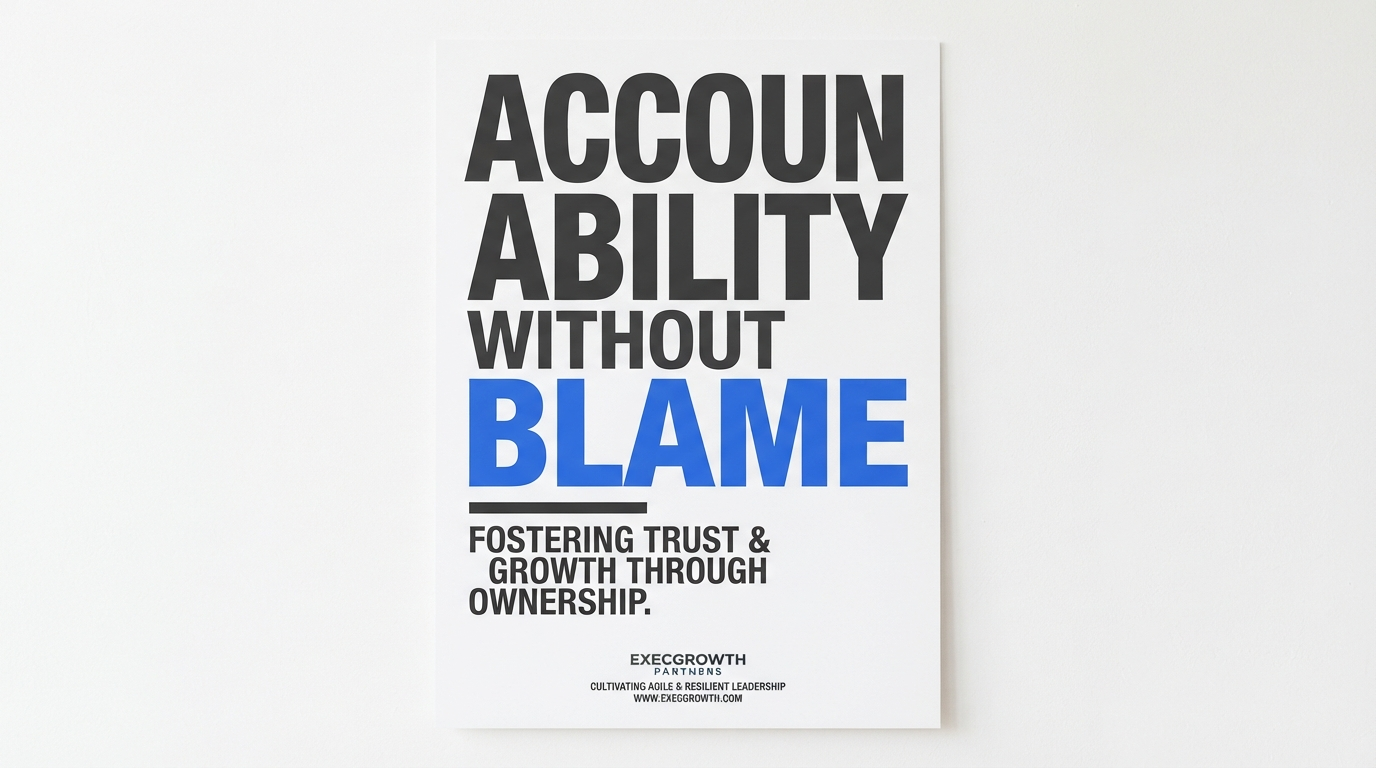
Accountability Without Blame: How New Managers Hold Teams Accountable (Free Template)
Picture this: You've just been promoted to manager. The thrill fades fast when a key project slips. Your instinct? Fire off an email: "Why wasn't this done?" The reply is curt, resentment simmers, and trust erodes. Sound familiar? New managers often walk this tightrope, mistaking accountability for blame—and tumbling into micromanaging. But what if you could foster accountability without blame, turning misses into momentum?
This isn't fluffy theory. It's a practical playbook for creating accountability as a new manager. Ditch the finger-pointing, climb the ownership ladder, and build a team that owns outcomes. HR leaders, take note: this scales to culture transformation. Let's dive in.
Climb the Ownership Ladder: From Victim to Victor
Accountability thrives on ownership, not obligation. Enter the ownership ladder—a mental model that maps team maturity. At the base: the victim mindset, where excuses rule ("The tools failed me"). Midway: responsibility, owning tasks but not results. The peak: full ownership, proactively driving success.
As a new manager, diagnose where your team sits. Guide them up rung by rung. Start small: after a win, ask, "What made that click?" For slips, pivot to curiosity. Teams ascend when they see ownership as empowerment, not punishment. This shift underpins how to hold your team accountable without breathing down necks.
- Level 1: Victim – Externalizes failure: "Market crashed it."
- Level 2: Responder – Does the minimum: "Task done."
- Level 3: Responsible – Owns delivery: "Here's why it met spec."
- Level 4: Owner – Drives impact: "Adjusted for bigger wins."
Agreements Over Expectations: The Framework That Sticks
Expectations are mind-readers' games—unspoken, unfair, forgotten. Agreements? Crystal-clear contracts co-created with your team. This agreement vs. expectation framework flips the script on creating accountability as a new manager.
Frame it like this: At kickoff, co-define success. "What does 'done' look like? By when? What support do you need?" Document it. Review weekly. When gaps appear, reference the agreement, not assumptions. No more "I thought you knew." Teams commit because they co-authored it, reducing micromanaging urges.
Swap Blame Language for Ownership Sparks
Ditch "You messed up" for Curiosity That Converts
Words wield power. Blame shrinks people; ownership expands them. Transform your vocabulary:
- "Why did you fail?" → "What was the plan, and what shifted?"
- "This is your fault." → "What can we adjust next time?"
- "Do better." → "How will you own the fix?"
These swaps model accountability without blame. Practice in the mirror if needed. Your team mirrors your tone—watch defensiveness dissolve into dialogue.
The 4 Questions: Post-Miss Autopsy for Future Wins
Missed deadline? Skip the lecture. Deploy these four questions to dissect and rebuild. They're surgical, neutral, forward-focused—perfect for how to hold your team accountable.
- What was expected? Realign on the agreement.
- What happened? Facts only—no judgment.
- What caused the gap? Root causes surface.
- What will change? Actionable commitments lock in.
Run this in 15-minute huddles. One team turned chronic delays into on-time deliveries after three cycles. It's learning disguised as accountability.
Your Free Accountability Agreement Template
Ready to implement? Copy this template. Customize per project or role.
Project/Role: ________________
Expected Outcomes: ________________
Timeline & Milestones: ________________
Resources Needed: ________________
Success Metrics: ________________
Review Cadence: ________________
Signatures: ________________
Print, sign, iterate. This one-pager cements ownership.
Own Accountability, Elevate Your Leadership
New managers, you've got the tools: ladder up ownership, agree explicitly, speak ownership, question wisely. HR pros, embed this for culture shifts. The result? Teams that self-correct, innovate, thrive—no micromanaging required.
Scale it further with our full guide. Unlock the guide now. Book a session at jemexcellence.com/booking. Step into management mastery—without the blame game.