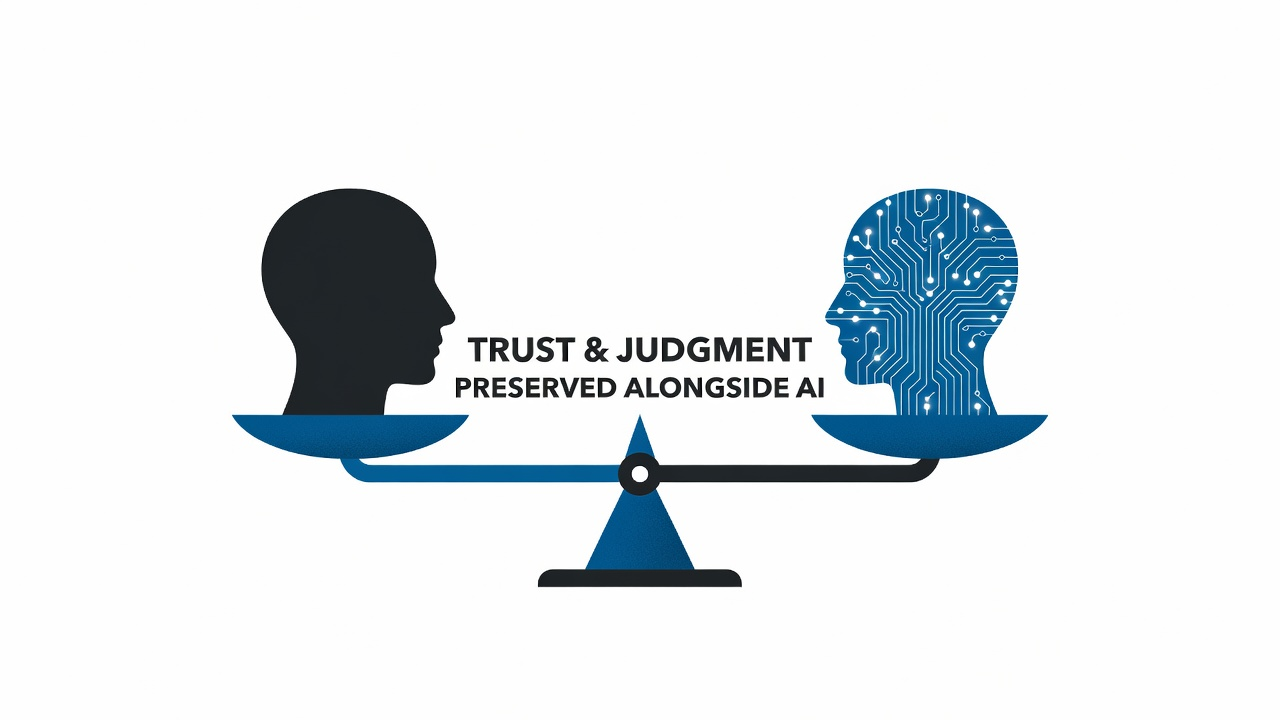
Trust and AI: 3 Principles to Safeguard Psychological Safety and Human Judgment
Picture a high-stakes team meeting. The manager pulls up a dashboard glowing with AI-generated insights: performance scores, promotion recommendations, even flags for potential flight risks. One name lights up red—a reliable contributor suddenly deemed expendable. Murmurs ripple through the room. Was this data-driven wisdom or a digital misfire? In that moment, trust hangs by a thread.
AI is reshaping workplaces at breakneck speed, sifting through vast data troves to inform hiring, evaluations, and more. Yet amid the efficiency gains, a subtle risk emerges: eroded trust. When opaque algorithms influence human fates, psychological safety—the bedrock of innovation and candor—can crumble. Leaders who prioritize trust and AI harmony don't fear the technology; they channel it ethically. This article unveils three timeless principles to protect psychological safety AI demands while honoring human judgment. These aren't guardrails born of panic, but bridges to confident collaboration.
Why Psychological Safety is Non-Negotiable in an AI-Driven World
Psychological safety thrives when teams feel safe to voice ideas, admit errors, and challenge norms without fear of reprisal. AI amplifies this stakes: an unchallenged recommendation might sideline talent or amplify biases lurking in training data. Consider a sales team where AI predicts quotas; if reps sense the tool undervalues their context—like market shifts or personal hurdles—resentment brews. Silence follows, creativity stalls.
Ethical AI leadership recognizes this interplay. It's not about shunning AI but stewarding it so it bolsters, rather than supplants, human insight. Teams that navigate this preserve a culture where vulnerability fuels progress. The principles ahead provide the blueprint.
Principle 1: Embrace Transparency in AI Use
Transparency isn't a buzzword—it's the sunlight that disinfects doubt. Start by openly declaring when AI enters the fray. Before sharing a hiring shortlist or performance review, note: "This ranking draws from our AI model analyzing metrics X, Y, Z." Suddenly, the black box cracks open.
Why does this fortify trust and AI? It invites dialogue. A developer might reveal: "That metric overlooks my recent project pivot." Concrete actions build this habit: Label AI outputs clearly in tools and reports. Train managers to explain models in plain language—no jargon veils. The result? Teams view AI as a teammate, not an overlord, nurturing psychological safety AI requires.
Principle 2: Guarantee the Right to Question AI Outputs
Questioning isn't rebellion; it's rigor. Empower every team member to probe AI results without backlash. "What data fed this? How was it weighted?" These queries surface blind spots, like outdated benchmarks skewing evaluations.
In practice, foster this through structured feedback loops. Dedicate meeting slots for "AI audits," where outputs are dissected collectively. One team likened it to peer review in science: essential for validity. This principle upholds human judgment as the ultimate validator, turning potential mistrust into shared ownership. Leaders modeling curiosity set the tone—"Great catch; let's refine the model."
Principle 3: Reserve Human Final Call on People Decisions
AI excels at patterns, but people defy algorithms. Promotions, terminations, role shifts—these demand the nuanced touch of human empathy, context, and foresight. Mandate that AI informs but never dictates these calls.
Embed this in policy: "AI scores guide discussions; humans decide outcomes." Picture a retention alert: AI flags burnout risk, but the manager, knowing personal circumstances, opts for mentorship over reassignment. This preserves dignity, reinforces ethical AI leadership, and signals: Your story matters more than any score. Over time, it cements trust as AI's North Star.
From Principles to Practice: The Team Agreement Exercise
Theory ignites action through ritual. Host a 45-minute Team AI Trust Agreement workshop. Gather your group; outline the three principles. Pose scenarios: "AI suggests demoting a veteran—do we disclose? Question? Override?"
- Brainstorm applications to your workflows.
- Vote on ground rules, like mandatory disclosures.
- Co-create a one-page charter, signed by all.
Revisit quarterly. This exercise doesn't just align—it bonds, embedding psychological safety AI in your DNA.
Charting the Path Forward: Lead with Trust
AI's promise is profound, but only if wielded with wisdom. By championing transparency, questioning rights, and human veto power, you safeguard trust and AI while elevating human judgment. Cultures flourish here—innovative, resilient, humane.
Ready to lead? Download our free Ethical AI Leadership Guide for templates, checklists, and rollout strategies. In the symphony of tech and team, conduct with clarity—your people will follow.